
Winter Lawn Care in Northeast Ohio: What Homeowners Should (and Shouldn’t) Be Doing in January
January in Northeast Ohio is a quiet month for lawns — but it’s far from unimportant.
From Wooster and Medina to Canton, Massillon, Hudson, Stow, Kent, and Alliance, homeowners often assume there’s nothing to think about until spring. In reality, what happens (and what doesn’t happen) in January plays a big role in how quickly and how well your lawn comes back when warmer weather arrives.
While professional lawn care treatments don’t begin until conditions allow in spring, January is about protection, preparation, and planning ahead. Understanding how cool-season grasses behave in winter — and avoiding common mistakes — helps set your lawn up for a stronger, healthier green-up.
This guide explains:
- What’s happening to your lawn beneath the snow
- Common winter lawn care mistakes homeowners make
- Snow mold risks in Northeast Ohio
- Why foot traffic matters more than you think
- How winter conditions affect spring lawn performance
- How a professional lawn care program prepares for spring success
Why January Lawn Care Matters in Northeast Ohio
Northeast Ohio experiences a unique winter pattern:
- Freeze–thaw cycles
- Heavy snowfall and lake-effect snow
- Extended periods of frozen ground
- Occasional mid-winter warmups
These conditions impact lawns across Medina County, Stark County, Summit County, Portage County, and Wayne County, even though growth is dormant.
Most lawns in Northeast Ohio are made up of cool-season grasses, including:
- Kentucky bluegrass
- Perennial ryegrass
- Fine and tall fescues
These grasses are designed to survive winter — but they still need to be protected to ensure a fast, even recovery in spring.
January is not about active lawn treatment. Instead, it’s about:
- Avoiding damage
- Minimizing disease risk
- Preserving turf health until spring applications begin
What Happens to Cool-Season Grass in January
Dormancy, Not Death
When temperatures consistently stay below 50°F, cool-season grass enters dormancy. Above-ground growth stops, but the plant is still alive.
Below the surface:
- Roots remain intact
- Energy is conserved
- The grass crown (the growing point) becomes the most critical area to protect
Damage to the crown in winter often leads to:
- Thin turf
- Bare spots
- Delayed green-up in spring
Why the Grass Is Vulnerable
Frozen turf becomes brittle. When grass blades and crowns are stepped on, crushed by snow piles, or compacted, they don’t recover until spring — and sometimes not at all.
This is why winter behavior matters just as much as spring treatments.
Common January Lawn Care Mistakes Homeowners Make
Even with the best intentions, many homeowners across Canton, Massillon, Wooster, and Alliance unknowingly harm their lawns in winter.
Mistake #1: Repeated Foot Traffic on Frozen Grass
Walking across frozen or snow-covered turf can:
- Snap grass blades
- Damage crowns
- Compact soil
Over time, this creates visible traffic patterns that show up in spring as:
- Thin lines
- Delayed growth
- Bare areas
What to do instead:
Stick to sidewalks, driveways, and consistent paths. If you must cross the lawn, use the same route to limit widespread damage.
Mistake #2: Piling Snow on the Lawn
Snow piles from shoveling or plowing are one of the biggest winter lawn issues in Northeast Ohio.
Large snow piles:
- Trap moisture
- Block airflow
- Increase disease risk
- Delay melting in spring
This is especially common in driveways throughout Hudson, Stow, Kent, and Medina, where snow is frequently pushed onto lawn edges.
Best practice:
Spread snow out when possible rather than piling it deep in one area.
Mistake #3: Leaving Leaves or Debris Behind
Leaves, sticks, and debris left on the lawn before snowfall create:
- Moisture pockets
- Reduced airflow
- Ideal conditions for fungal growth
A clean lawn surface going into winter is one of the simplest ways to reduce spring problems.
Mistake #4: Assuming Winter Fertilization Helps
January is not the time for fertilization, weed control, or lawn treatments.
Grass cannot absorb nutrients while dormant, and applying products now can:
- Wash away into storm drains
- Waste money
- Create environmental concerns
Professional lawn care programs time applications for when the grass can actually use them, typically starting in early to mid-spring depending on weather.
Snow Mold: A Common Northeast Ohio Winter Lawn Problem
Snow mold is one of the most common winter lawn issues we see in Wooster, Canton, Medina, and surrounding areas.
What Is Snow Mold?
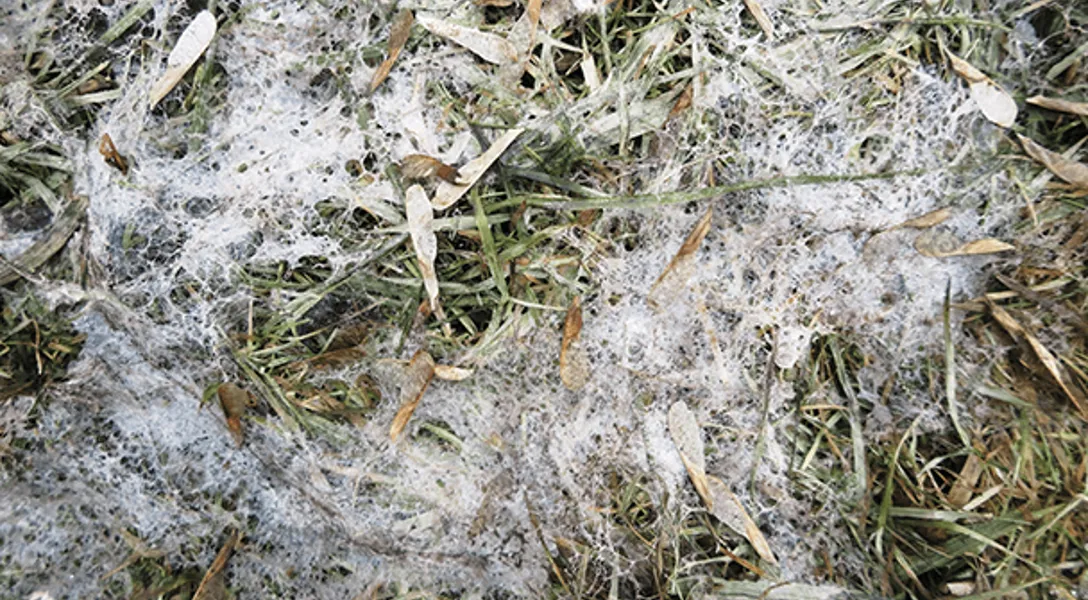
Snow mold is a fungal disease that develops under prolonged snow cover when:
- Temperatures hover near freezing
- Grass stays wet
- Airflow is limited
In spring, snow mold often appears as:
- Circular patches of matted grass
- Gray or pink discoloration
- Turf that looks flattened or thinned
Why Northeast Ohio Lawns Are at Higher Risk
Northeast Ohio winters are unpredictable. Repeated freeze–thaw cycles, followed by heavy snowfall, create perfect conditions for fungal activity under the snow.
Snow piles, excess thatch, and heavy traffic increase the risk.
Can Snow Mold Be Treated in January?
No — and this is important.
Snow mold is managed through:
- Proper fall preparation
- Correct mowing height before winter
- Preventative strategies built into a professional lawn care program
- Avoiding winter damage
January is about limiting conditions that allow snow mold to worsen, not applying treatments.
-
Why Foot Traffic Damage Shows Up in Spring
Homeowners are often surprised when their lawn looks uneven or thin in April — even though it looked “fine” all winter.
Here’s why:
- Winter damage doesn’t become visible until growth resumes
- Grass that was crushed or compacted struggles to rebound
- Damaged crowns don’t produce new blades efficiently
Areas most affected tend to be:
- Paths between doors and driveways
- Dog routes
- Snow pile zones
- Lawn edges near plowed areas
This is why January behavior has a direct impact on spring results.
How Winter Lawn Conditions Affect Spring Green-Up
A healthy spring lawn doesn’t start in March — it starts with how well your lawn survives winter.
Lawns that:
✔ Avoid heavy foot traffic
✔ Have minimal snow pile damage
✔ Enter winter clean and properly mowedTypically experience:
- Faster green-up
- Thicker turf
- Fewer bare spots
- Less weed pressure
This allows spring lawn treatments to be more effective, because they’re working with healthy turf — not repairing preventable damage.
Professional Insight: How Greener Grass Prepare for Spring in Winter
While lawn care companies in Northeast Ohio aren’t actively treating lawns in January, this is a critical planning period.
Professionals use winter to:
- Review lawn history
- Identify snow mold risk areas
- Plan spring fertilizer and weed control timing
- Prepare equipment and materials
- Schedule early-season routes for cities like Medina, Canton, Massillon, and Wooster
“Winter tells us a lot about what a lawn will need in spring. Damage patterns, snow cover behavior, and past disease issues help us tailor the upcoming season.”
— Northeast Ohio Lawn Care Professional - Avoiding winter damage
January is about limiting conditions that allow snow mold to worsen, not applying treatments.

What Homeowners Should Do in January
Even though treatments wait until spring, homeowners can still help their lawn now.
✅ Limit Foot Traffic
Avoid unnecessary walking across frozen or snow-covered grass.
✅ Distribute Snow When Possible
Prevent large, compacted piles on turf.
✅ Keep Lawn Surfaces Clear
Remove debris before heavy snowfall when possible.
✅ Observe & Take Notes
Pay attention to:
- Traffic patterns
- Snow pile locations
- Areas that stay wet or icy longer
These insights are valuable when starting or adjusting a professional lawn care program.
Why January Is the Right Time to Plan Spring Lawn Care
January is one of the best times to:
- Research lawn care companies
- Lock in spring service
- Avoid last-minute scheduling delays
- Start the season with a clear plan
As temperatures rise, lawn care schedules fill quickly — especially across high-demand areas like Hudson, Stow, Kent, Medina, and Canton.
By planning early, homeowners ensure:
- Timely spring applications
- A smoother transition out of winter
- Better overall results for the entire growing season